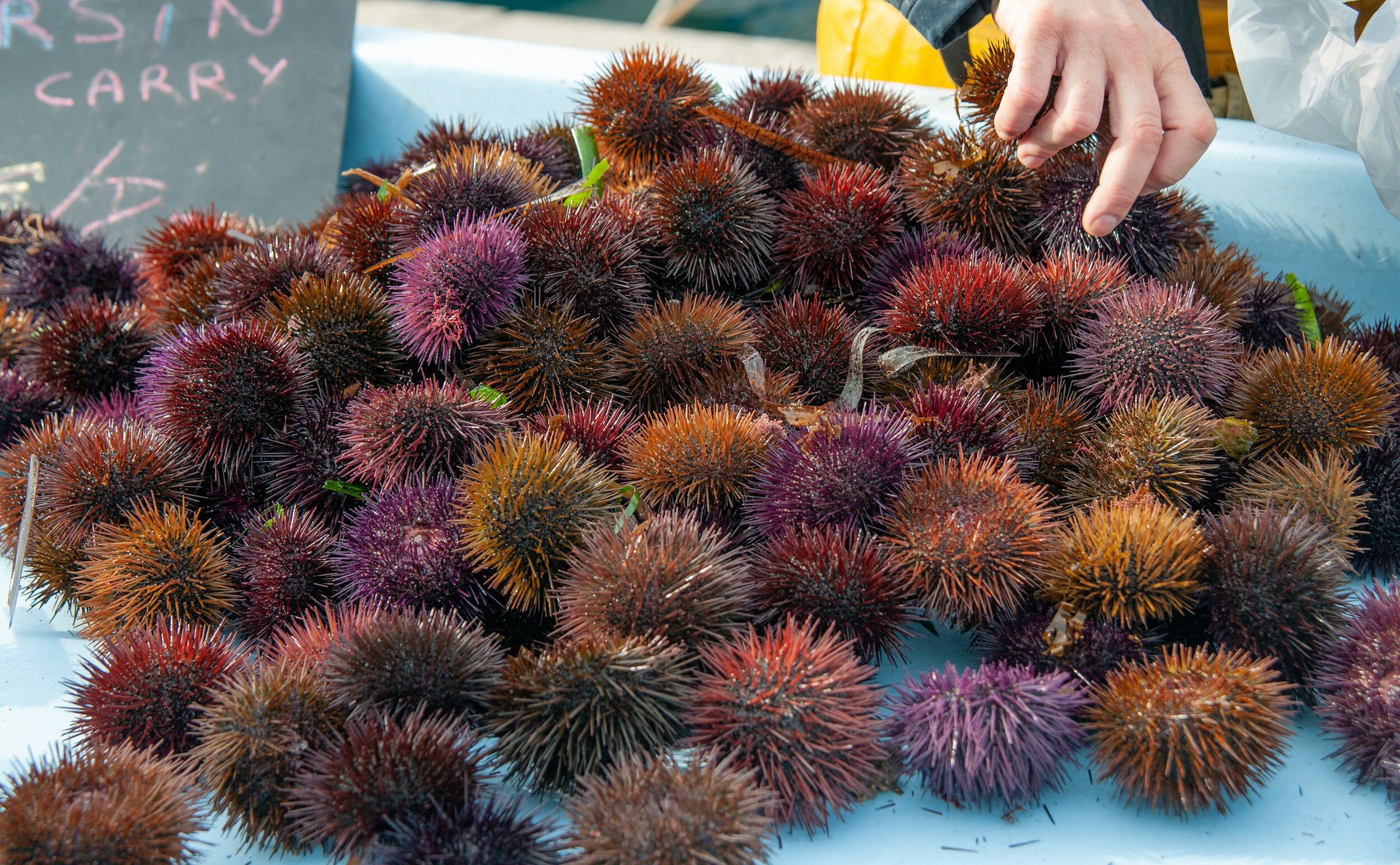
Why Purple Urchins?
Purple sea urchins are often portrayed as the villain in the story of California's disappearing kelp forests.
But the reality is more nuanced.
Purple sea urchins are a native species and have lived along the Pacific Coast for thousands of years. In a healthy ocean, they play an important role in the ecosystem, grazing on algae and helping maintain the balance of life on the reef.
The challenge isn't that purple sea urchins exist—it's that the ocean around them has changed.
From Balance to Barrens
Purple sea urchins are a native part of California's coastal ecosystem.
In healthy kelp forests, their populations are naturally kept in balance by predators such as sunflower sea stars, California sheephead, and sea otters in areas where they are present.
Beginning in 2013, a combination of marine heatwaves and the catastrophic decline of sunflower sea stars dramatically changed that balance.
Without enough predators, purple urchin populations exploded.
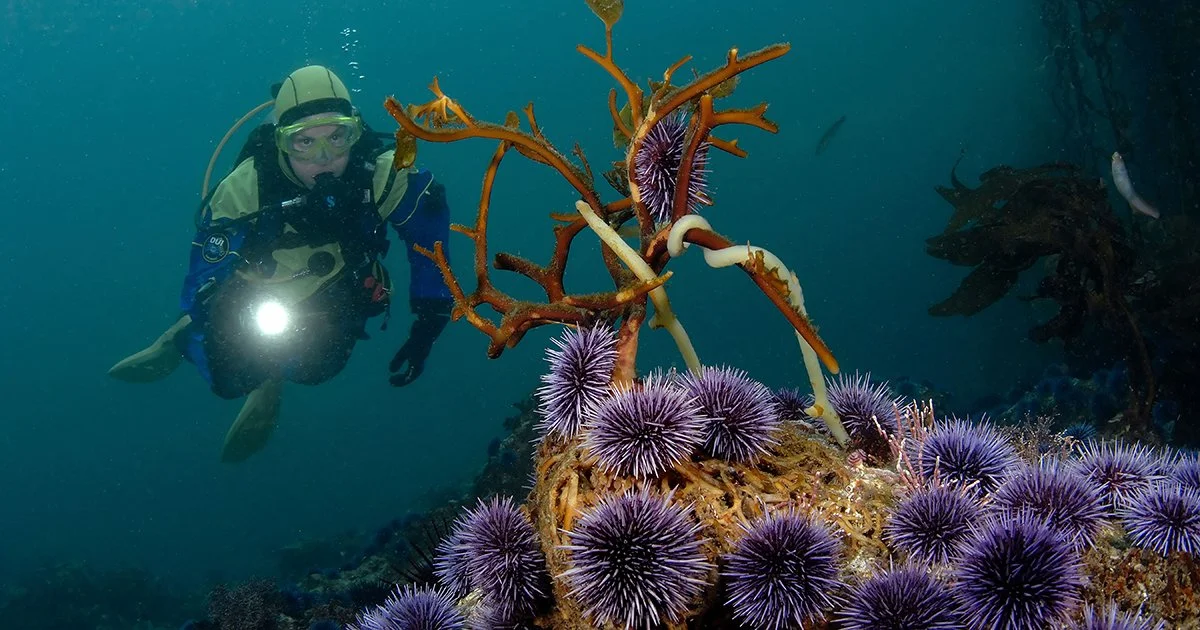
Millions of hungry urchins consumed vast areas of bull kelp, transforming vibrant underwater forests into what scientists call sea urchin barrens - rocky reefs covered by dense populations of purple urchins with very little kelp remaining.
At Caspar Cove, community divers help reduce this pressure by removing overabundant purple urchins.
Creating even small openings on the reef gives kelp a chance to re-establish itself, supporting the return of fish, invertebrates, and other marine life.
The goal isn't to eliminate purple urchins.
It's to restore balance.
Healthy oceans depend on healthy relationships between predators, prey, and habitat.
Our work helps create the conditions for that balance to return.