Why Kelp Matters
Most people have never seen a kelp forest.
Beneath the surface of Northern California's coastal waters lies an extraordinary world—towering underwater forests that sway with the rhythm of the ocean, providing food, shelter, and refuge for countless marine species.
These forests are as vital to the health of our coastline as redwood forests are to the land. They support thriving marine ecosystems, protect our shores, sustain fisheries, and inspire generations of divers, scientists, artists, and ocean lovers.
The Forests Beneath the Waves
If you've ever stood beneath the towering canopy of a redwood forest, you know what it feels like to be surrounded by something ancient, alive, and awe-inspiring.
Now imagine that same feeling beneath the surface of the ocean.
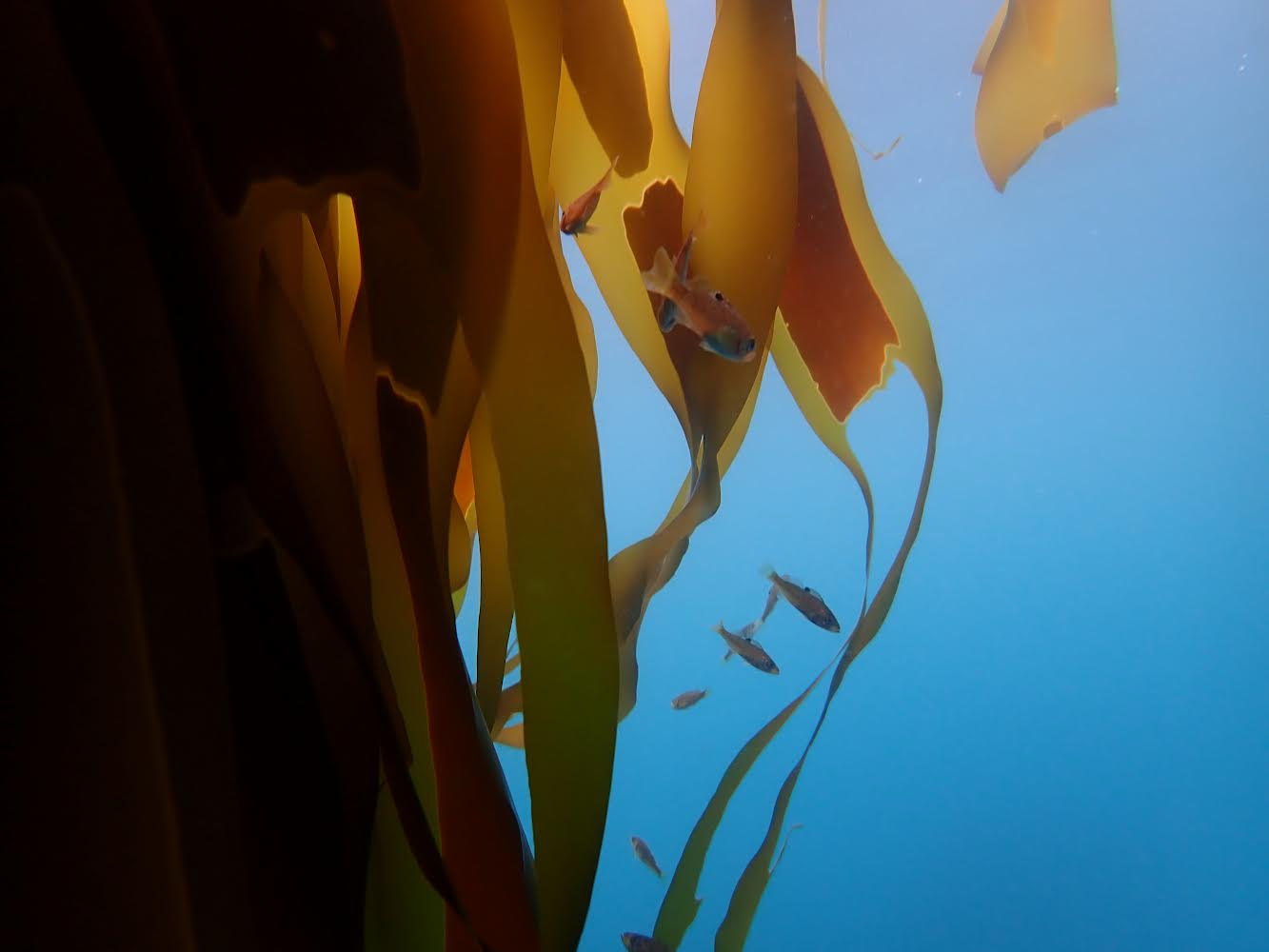
Bull kelp forests are often called the forests beneath the waves, and for good reason. Stretching from the rocky seafloor to the ocean's surface, these underwater forests create one of the most productive and biologically rich ecosystems on Earth.
Although many people never have the opportunity to see them, kelp forests are every bit as remarkable as California's iconic redwoods.
They are places where life begins, flourishes, and finds refuge.
Yet today, much of this extraordinary ecosystem has disappeared.
The good news is that nature is remarkably resilient—and so are people.
By understanding why kelp matters, we can better understand why restoring these forests matters for all of us.
A Foundation for Ocean Life
A healthy kelp forest is much more than seaweed.
It is a living community.
Hundreds of species depend on kelp forests for food, shelter, protection, and breeding habitat.
Within these underwater forests you'll find:
🐟 Rockfish weaving through the kelp canopy
🦀 Crabs hiding among the holdfasts
🦑 Squid laying their eggs
🦭 Harbor seals hunting through the fronds
🦦 Sea otters floating nearby where populations exist
⭐ Sea stars moving slowly across the reef
🐚 Abalone grazing beneath the canopy
Every layer of a kelp forest provides a home for life.
When kelp thrives, entire ecosystems thrive.
One of the Fastest Growing Organisms on Earth
Bull kelp is extraordinary.
Under the right conditions it can grow more than a foot every day, eventually reaching heights of 60 to 100 feet in a single growing season.
Beginning as a microscopic spore, each individual kelp plant develops into a towering organism anchored to the rocky reef by a holdfast that resembles roots.
Its long stem stretches toward the sunlight until reaching the surface, where a floating bulb supports broad blades that capture the energy needed for rapid growth.
These forests change constantly with the tides, currents, and seasons.
They are alive with movement.
Why Kelp Matters to People
Healthy kelp forests support much more than marine life.
They support people.
For generations they have provided:
🎣 Healthy fisheries
🤿 Incredible diving experiences
🦀 Habitat for commercially important species
🌊 Protection from coastal erosion by reducing wave energy
🌎 Carbon storage and healthier oceans
🏖️ Recreation, tourism, and local economies
For many Californians, kelp forests are also deeply personal.
Families have gathered abalone for generations.
Divers have explored these reefs their entire lives.
Scientists have dedicated careers to understanding them.
Artists have found inspiration in their beauty.
The loss of kelp is not just an ecological story.
It is a human story.
What Happened?
Beginning in 2013, California's North Coast experienced an unprecedented ecological shift.
A series of marine heatwaves warmed the ocean.
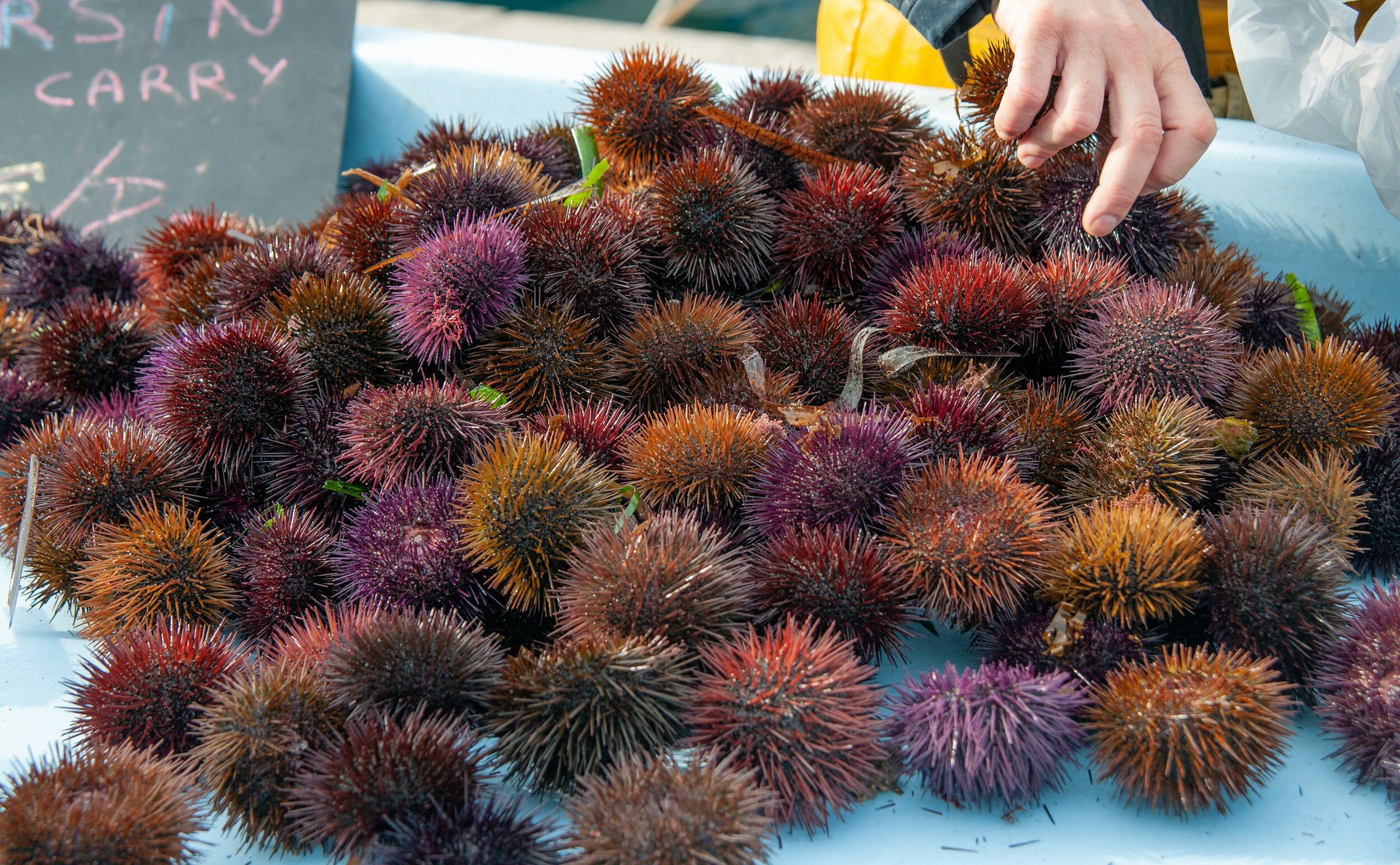
At nearly the same time, sunflower sea stars—one of the purple sea urchin's most important predators—were devastated by Sea Star Wasting Syndrome.
Without enough predators to keep them in balance, purple sea urchin populations exploded.
Millions of urchins consumed nearly every piece of remaining bull kelp they could reach.
Over just a few years, more than 90% of Northern California's bull kelp forests disappeared.
Vibrant underwater forests became rocky reefs covered almost entirely by purple sea urchins.
Scientists call these landscapes urchin barrens.
For many people who knew these reefs, it was heartbreaking.
Nature Wants to Recover
Despite these challenges, kelp forests are surprisingly resilient.
Given the right conditions, bull kelp can return.
One of the most important ingredients is simply reducing the pressure from overabundant purple sea urchins.
When divers remove urchins from restoration sites, something remarkable begins to happen.
Sunlight reaches the reef.
Spores settle.
Young kelp begins to grow.
Fish return.
Life slowly rebuilds.
Recovery doesn't happen overnight.
It happens one season at a time.
Why Community Matters
One of the most inspiring lessons from Caspar Cove is that ordinary people can become part of extraordinary restoration.
Scientists provide research.
Conservation organizations develop restoration strategies.
But community members bring something equally important:
Action.
Every month, volunteer divers enter the water to remove overabundant purple sea urchins.
Volunteers greet visitors at the Kelp Desk.
Photographers document progress.
Families gather for potlucks.
Students ask questions.
Neighbors become friends.
Together, these small acts become something much larger.
A movement.
Hope Beneath the Surface
Around the world, environmental stories often focus on loss.
At Caspar Cove, we believe it's equally important to tell stories of hope.
Hope doesn't ignore the challenges.
Hope recognizes that people working together can make a difference.
We are already seeing signs of recovery.
Bull kelp is returning to portions of the Cove.
Marine life is beginning to reappear.
The work is far from finished, but each season reminds us that restoration is possible.